
Best Exercises for Metabolism, Explained
There is no single workout that changes how every body uses energy. The most useful routine is one you can perform consistently, combining movement that challenges your heart and lungs with strength work that trains major muscle groups. For beginners, that may mean starting with brisk walking, body-weight exercises, or coached movements and building gradually.
The best exercises for metabolism are usually a practical mix of aerobic activity and muscle-strengthening work, scaled to your current fitness level and goals. The CDC adult activity guidance says some activity is better than none, and that adults can build toward a weekly mix they can keep up.
A coach-led routine can bring those pieces together without turning every session into a test. Exercises can be adjusted for your experience, and a consistent plan can include conditioning, strength, recovery, and everyday habits. Before choosing specific movements, it helps to understand what metabolism means during a workout and why different types of exercise support different parts of your training.
What Metabolism Means for Your Workouts
Metabolism is the set of processes your body uses to turn food into energy and keep you going. That energy supports basic functions such as breathing, circulation, temperature control, and organ activity. It also powers movement, from a workout to walking across the room.
A common misunderstanding is that all of your daily energy use comes from exercise. In reality, much of it happens while you are at rest. Your resting energy needs are shaped by factors you cannot fully control, including your age, body size, sex, and genetics. That means two people can eat and train in similar ways while having different energy needs. It also means there is no single workout that can completely rewrite how your body works.
Muscle tissue uses somewhat more energy at rest than fat tissue. Building or maintaining muscle can therefore support your overall energy needs, but a few pounds of added muscle will not overhaul resting metabolism. Be cautious of claims that promise a dramatic change from one exercise, food, or short-term program.
Exercise still plays an important role. You use energy during the session, and regular strength training can help you maintain muscle as you get older. Training can also make movement feel more manageable, which may support a more active day outside the gym. These benefits do not require a perfect routine. A coach can help you choose movements that match your current ability and progress at a practical pace.
Skip the search for a fix for a slow metabolism. Move regularly, include strength work when it fits, and pick activities you will actually repeat. The next section compares exercise types and shows where each one belongs in a week.
Best Exercises for Metabolism, Compared
There is no single best exercise for metabolism. The most useful choice is one you can perform safely, repeat consistently, and adjust as your fitness changes. Different types of movement contribute in different ways, so a balanced week may include strength work, aerobic activity, optional intervals, and ordinary movement between workouts.
| Exercise type | What you do | How it fits metabolism | Beginner scale |
|---|---|---|---|
| Strength training | Practice squat, hinge, push, and pull patterns with suitable resistance. | Helps keep muscle while you build a consistent training habit. | Work toward two or more days a week covering the major muscle groups: legs, hips, back, abdomen, chest, shoulders, and arms. Start with manageable resistance and controlled sessions. |
| Steady aerobic work | Choose a brisk walk, easy cycle, or paced class that you can sustain. | Uses energy while you are doing it and supports regular cardiovascular activity. | Build gradually toward the CDC adult activity guidance: 150 minutes of moderate activity a week, or 75 minutes of vigorous activity. Smaller chunks count. |
| Intervals | Alternate short, harder efforts with easier recovery periods. | Provides a more demanding conditioning option, but it is not a shortcut. | Consider intervals only after you have a movement base. Keep the harder efforts brief, recover fully, and reduce the intensity if you cannot maintain good control. |
| Daily movement | Stand, walk between tasks, take active breaks, and handle household activity. | Fills the hours between workouts and adds movement across the day. | Look for small opportunities that fit your routine. A few short walks or standing breaks can be more approachable than adding another formal workout. |
Strength training belongs in a beginner’s plan because keeping muscle supports how you move. If you are new to resistance work, see our strength training for beginners guide. That page covers how to start lifting, including form. This comparison will not repeat those steps.
Aerobic work and daily movement can make activity feel more practical, especially when a full workout does not fit the day. Intervals can be useful for someone who already has a base, but harder is not automatically better. Start with the option that matches your current ability, schedule, and preferences, then progress slowly. A coach can also help scale movements so the routine remains challenging without becoming discouraging.
How to Scale These Exercises as a Beginner
The best exercises for metabolism are not useful if the version is too difficult to repeat with good control. Scaling is not taking the easy way out. It is choosing a starting point that lets you practice the movement, build consistency, and gradually ask more from your body.
- Choose a version you can control. A sit-to-stand from a bench can teach the same basic squat pattern without requiring a deep squat. A wall or knee push-up can help you practice pushing before you work toward a full push-up. If running feels like too much, begin with a brisk walk. The right version is one you can repeat without rushing, holding your breath, or losing your balance.
- End the set when your form gets sloppy. You do not need to chase exhaustion to make a workout worthwhile. When your back, knees, shoulders, or posture start moving differently from the first repetitions, pause and reset. You can take a short break, reduce the range of motion, or switch to a simpler version. Quality practice gives you clearer feedback than forcing a few more tired repetitions.
- Keep the first weeks manageable. A short session is a strong starting point, especially when you are rebuilding an exercise habit. About 45 minutes or less, which is the length described for the gym’s coached small-group workouts, is plenty for a focused session. Some activity is better than none, so leave room in your week for recovery and ordinary life instead of starting with a plan you cannot maintain.
- Add effort before complexity. Once a movement feels steady, change only one thing. Take another controlled repetition, walk a little more briskly, rest slightly less, or add a modest amount of resistance if a coach says it fits. You do not need a more complicated exercise every time you want to progress. A familiar movement done with better control can be a real next step.
- Ask for a movement change instead of skipping the pattern. A coach can adjust the height, range, pace, resistance, or position so you can participate at your current level. At your first visit, arrive a few minutes early in comfortable exercise clothes and bring water, a mat, and a towel. Keep sneakers off the main exercise mats. You can also review what to expect at your first class before you go.
Scaling keeps the focus on showing up, moving well, and building the next repeatable step. As your confidence grows, your coach can help you decide when a little more effort or a new variation makes sense.
A Simple Weekly Mix You Can Repeat
A useful week does not need to be packed with hard workouts. For a beginner exploring the best exercises for metabolism, the goal is to practice the basics often enough that they still feel manageable next week. Strength work, steady movement, easier conditioning, and recovery can all have a place without turning every day into a test.
Here is one way to spread the week. Do a strength session on Monday. Take a brisk walk on Tuesday. Rest or walk gently on Wednesday. Complete a second strength session on Thursday. Choose another brisk walk or an easy conditioning session on Friday or Saturday.
A short optional interval session can fit later in the week if the easier sessions already feel repeatable. Sunday can be a rest day, or simply a day for relaxed movement.
- Two strength days: Practice major movement patterns such as squatting, hinging, pushing, pulling, carrying, and bracing. Use variations that let you control the movement and keep good form.
- Two or three easier movement days: Brisk walking or comfortable conditioning can help you chip away at the commonly cited goal of 150 moderate minutes across the week. You can divide that time into smaller, practical sessions.
- One optional interval day: Add shorter bursts only after your walking and strength routine feels steady. Keep the hard portions brief and allow enough easy movement between them.
- Daily low-key activity: Walk when convenient, stand up between long sitting periods, or take a few easy movement breaks. These small choices support an active week without replacing planned training.
This is an example, not a prescription. Your schedule, experience, health, and preferences should shape the details. Rest days are part of the plan, especially when you are learning new movements or increasing activity. Choose an effort you can repeat next week rather than chasing the hardest workout you can tolerate once. If you prefer support and accountability while building that routine, small-group coaching can help keep the week consistent.
Where a Coach-Led Routine Fits In
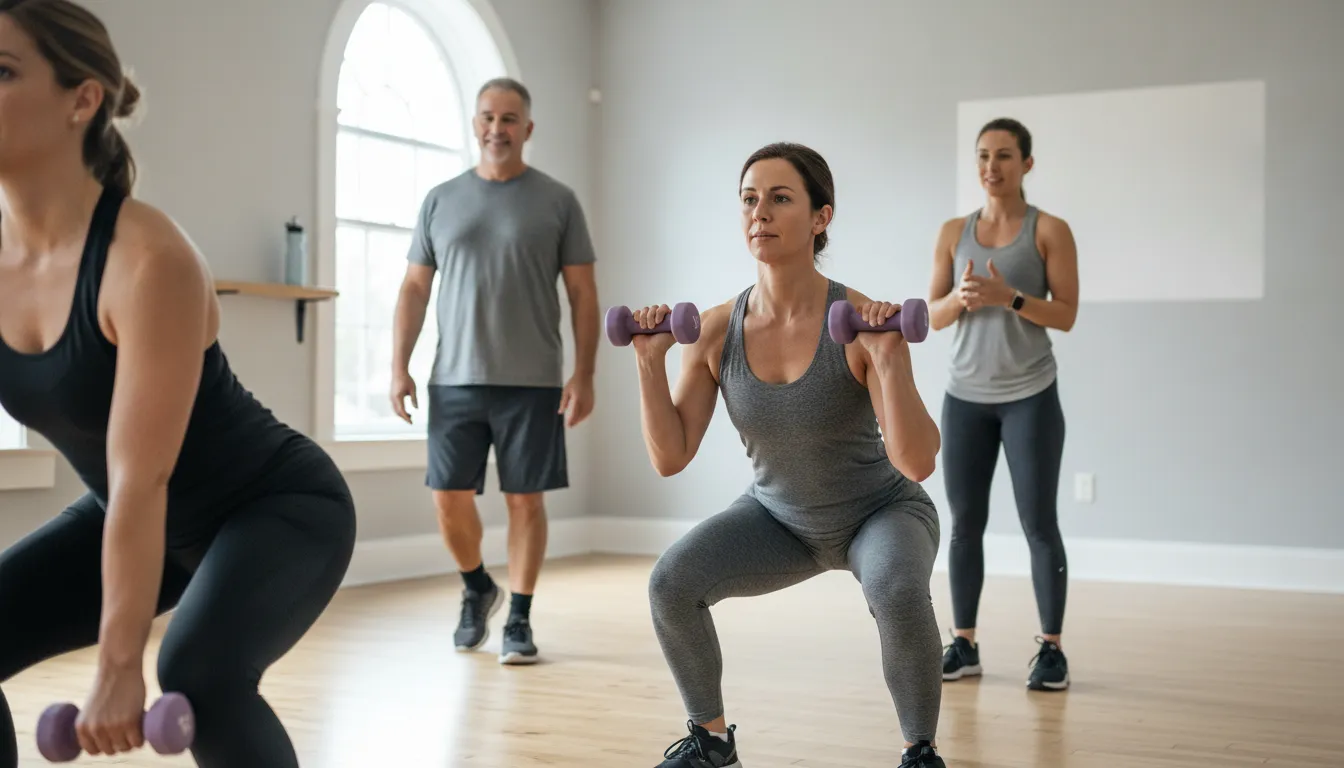
You can practice this mix on your own. A coach helps when the hard part is showing up, choosing a sensible version, and staying consistent. Monroe Twp Boot Camp is a one-location gym at 475 Spotswood-Englishtown Road in Monroe Township, NJ. Group boot camp is coach-led and usually lasts about 45 minutes or less. Classes use everyday patterns such as squatting, pushing, and pulling. And those patterns are scaled so a beginner and a more experienced member can train in the same room.
Private training is a different pace. It is one-to-one strength and conditioning you can use on its own or alongside group classes. People often choose it when they want more attention on pacing and accountability, not because group training is a lesser option. Either way, the point is a plan you can repeat, not a workout that only works once.
The VIP 63 Day Transformation is a habit track aimed at busy parents and professionals. It centers on five habits: movement, nutritious food, strength, water, and rest. Treat it as a coaching structure. It is not a promise that your body will change on a set date, and it does not replace advice from a doctor or a registered dietitian.
Kickboxing is an optional harder conditioning style, not a required metabolism workout. It uses 14- or 16-ounce gloves and mixes striking with calisthenics. Nutrition coaching is education, a personal plan, and ongoing accountability. It is not medical care and it does not treat a health condition.
If you want to see how those options sit together, start with the coach-led training options on the site. A first class is a request through the form, not a reserved time slot. A friend or spouse needs to send their own request. None of these paths guarantee a result. They give you a coach, a scaled session, and a place to practice the mix this article describes.
Request a First Class
Want to try this mix with a coach? Monroe Twp Boot Camp can start you in a small group. Fill out the form to request your first free class. That request does not reserve a time, and it is not a promise of a result. A friend or spouse should send a separate request. You can also call (732) 702-1224 and the team will help you pick a sensible starting point.
Frequently Asked Questions
Is there one best exercise for metabolism?
No single exercise works best for every beginner. A useful starting mix includes strength movements, steady walking or other aerobic activity, and short periods of manageable conditioning. The best choice is one you can perform safely, repeat consistently, and progress with coaching.
Does strength training help metabolism more than cardio?
Strength training and cardio support different parts of a well-rounded routine, so it is not useful to rank one as universally better. Strength work challenges your muscles, while aerobic exercise builds movement capacity and endurance. Combining both can make training more balanced and practical.
Is walking useful for a beginner?
Yes. Walking is a simple, lower-impact way to build an activity habit and improve your comfort with regular movement. Begin at a pace and duration you can manage, then increase gradually if it feels appropriate. It can complement coached strength and conditioning rather than replace every type of exercise.
How many days a week should a beginner train?
There is no universal schedule that fits every person. Start with a routine that leaves room for recovery and that you can maintain around work, family, sleep, and other responsibilities. A coach can help scale exercises, adjust the workload, and build consistency without treating an ambitious schedule as a guarantee of results.
Should I see a doctor before starting exercise?
If you have a medical condition, symptoms, an injury, or uncertainty about whether exercise is appropriate for you, ask a qualified healthcare professional before beginning. This article and a fitness coach cannot provide medical advice or diagnose a problem. Share any relevant guidance with your coach so the workout can be adapted appropriately.