
Body Composition Analysis: What It Measures and Why
You’re showing up for workouts, building strength, and making changes to your routine, but the scale hasn’t moved much. That doesn’t mean your effort isn’t paying off. Body composition analysis estimates the balance of fat, lean tissue, and water in your body, which can reveal trends that weight alone may not show. It’s not a diagnosis or a perfect measurement, and one reading can’t tell the whole story. Still, when you compare assessments taken under similar conditions, the results can offer useful context for your fitness goals. Learn what the numbers mean, what can affect them, and how Monroe Township Bootcamp’s InBody assessments can complement your training.
Key Takeaways
- Look beyond scale weight: Body composition estimates fat, lean tissue, and water, offering more context about changes in your body.
- Compare consistent readings over time: Use the same assessment method under similar conditions, and consider results alongside strength, energy, and wellbeing.
- Pair tracking with steady training: Monroe Township Bootcamp offers InBody assessments and bootcamp-style workouts to support weight-loss and strength goals.
What Is Body Composition Analysis?
How it estimates your body’s makeup
Body composition analysis estimates how your body weight is distributed among components such as body fat, lean tissue, muscle, bone mineral, and water. The details depend on the testing method. Bioelectrical impedance analysis, or BIA, sends a very small electrical current through the body and uses the resistance it encounters to estimate different components. The InBody guide to body composition explains these components and common testing methods.
Because a device estimates rather than directly measures every tissue, treat the result as a useful snapshot, not an exact inventory of your body. Comparing readings over time can help you spot patterns, especially when you use the same method and keep testing conditions consistent.
Body composition vs. weight
A scale reports your total weight, but it doesn’t show whether a change reflects fat, muscle, or water. Body composition analysis adds context, especially when the number on the scale stays steady while your body changes. For example, losing fat while building muscle may lead to only a small change in weight, even as your strength or clothing fit improves. A quick weight change, meanwhile, may reflect fluid shifts rather than lasting fat loss.
At Monroe Township Bootcamp, members can use InBody assessments to follow body-composition trends alongside their workouts and other progress markers. Compare readings over time under similar conditions, rather than letting one result set expectations.
Body composition vs. BMI
Body mass index, or BMI, is a screening measure based on height and weight. It can help identify broad patterns, but it doesn’t distinguish fat from muscle or show where fat is stored. A muscular person may have a higher BMI without a high body-fat level. Someone with a BMI in a typical range may also have a higher proportion of body fat and less muscle than the number suggests.
Body composition analysis estimates the proportions of different tissues, adding detail that BMI alone can’t provide. Neither measure gives a complete picture of health, and body-composition results are not a diagnosis. Consider them alongside your health history, fitness, and guidance from a qualified healthcare professional.
What Does Body Composition Analysis Measure?
Body composition analysis estimates how your body weight is divided among fat, lean tissue, and water. Depending on the equipment, a report may also include estimates of fat distribution, skeletal muscle, and the energy your body uses at rest. The results give you more context than a scale alone, but they are estimates, not exact measurements or a medical diagnosis.
These metrics can help you spot changes that weight by itself may not show. For example, your weight might stay similar while an assessment estimates less fat and more lean mass. That can be useful information when you’re working toward weight loss while maintaining strength.
The specific measurements and their accuracy depend on the testing method. Hydration, recent meals, and exercise can also affect some results. At Monroe Township Bootcamp, InBody assessments offer a way to track body composition alongside your training. Knowing what each metric represents can help you interpret your report with care and focus on trends over time.
Body fat percentage and fat mass
Body fat percentage estimates what portion of your total weight comes from fat. Fat mass is the estimated amount of fat, usually shown in pounds or kilograms. Two people can weigh the same but have different body fat percentages because their bodies contain different amounts of fat and lean tissue.
Body fat has important functions, but a single percentage does not tell you everything about your health or fitness. Reference ranges vary with factors such as age and sex, and estimates differ depending on the measurement method. InBody’s overview of body composition explains how body fat percentage fits alongside other measurements. If you’re working toward weight loss, compare readings over time and consider them with other indicators, such as strength, energy, and how you feel.
Lean mass and skeletal muscle
Lean mass generally includes everything in your body that isn’t fat, including muscle, bones, organs, and body water. It isn’t the same as muscle mass. Some reports estimate skeletal muscle mass, which refers to the muscles attached to your skeleton that help you move and perform everyday tasks.
These measures can add context when your weight changes slowly. If you’re aiming to lose fat while maintaining or building muscle, the scale may not reflect every change. Looking at estimated fat mass and lean mass together can give you a broader view of your progress. InBody explains the difference between lean mass and skeletal muscle. Check the labels on your report, since the terms describe different things and shouldn’t be treated as interchangeable.
Estimated body water and hydration
Total body water estimates the fluid inside and outside your cells. Water is a substantial part of body weight and supports many basic functions. Since hydration shifts throughout the day, a body water estimate can change between assessments. A reading after a workout, for example, may differ from one taken under your usual testing conditions.
Many body composition devices use bioelectrical impedance analysis, or BIA, which estimates tissue amounts by measuring how a small electrical current moves through the body. Hydration can affect that measurement, so a body water result is not a precise hydration test. InBody describes total body water as one part of a body composition assessment. For a more useful comparison, follow the testing instructions and try to take repeat assessments under similar conditions.
Estimated visceral fat and fat distribution
Visceral fat is stored deep in the abdomen, around internal organs. It differs from subcutaneous fat, which sits just beneath the skin. Some body composition reports include a visceral fat estimate or rating, while others show how fat is distributed across areas of the body.
These figures can provide context, but they don’t directly show internal fat or diagnose a health condition. The result depends on the device and the method it uses. InBody’s guide to body composition explains how visceral adipose tissue relates to fat around the abdominal organs. If a result concerns you, discuss it with a qualified healthcare professional. For fitness tracking, look at consistent readings over time rather than drawing conclusions from a single assessment.
Segmental results and estimated BMR
Some assessments provide segmental estimates for areas such as the arms, legs, and trunk. These results can show how estimated lean mass or fat is distributed across the body. They may help you track patterns, but they don’t directly measure strength or tell you how well a muscle performs.
A report may also include an estimated basal metabolic rate (BMR) or resting metabolic rate (RMR). This is an estimate of the energy your body uses at rest, based on factors such as body size and tissue estimates. It isn’t a personalized calorie target or a complete measure of your daily energy needs. UC Davis Health explains how resting metabolic rate relates to body composition. Treat the number as general context, not a prescription for how much to eat.
Why methods produce different results
Body composition tests use different equipment and techniques, so results from separate methods may not match. BIA estimates tissue amounts using the movement of an electrical current through the body. DEXA uses low-dose X-rays to estimate bone, fat, and lean tissue. Other approaches include skinfold measurements and methods that estimate body density through water or air displacement.
Each method has its own process and sources of variation. Even repeat readings from the same device can shift with hydration, meals, recent exercise, or other testing conditions. For that reason, compare results from the same method when tracking trends, rather than treating readings from different tools as interchangeable. InBody notes that body composition estimates can vary by method. Consistent assessments, paired with your training progress and wellbeing, offer more useful context than one reading alone.
Why Is Body Composition Analysis Useful?
Spot changes the scale can miss
The scale shows your total body weight, but not what that weight is made of. It can’t distinguish fat from muscle or account for changes in body water. That means your weight might stay about the same even as your body composition changes. For example, you could lose fat while building muscle, with little movement on the scale.
Body composition analysis estimates the amount of fat and lean tissue in your body, adding context to your weight. As InBody explains, two people can weigh the same and have different proportions of fat and muscle. Treat a reading as one piece of information, alongside how you feel, how your clothes fit, and how you’re progressing in your workouts.
Track fat loss and muscle mass
When your goal is to lose fat, body composition measurements can help you look beyond pounds lost. They may indicate whether estimated fat mass is changing and whether you’re maintaining or building lean mass as you train. This can be helpful if you’re strength training, since gaining muscle may partly offset fat loss on the scale.
Pair measurements with practical signs of progress, such as increased strength, better workout stamina, and improved recovery. You might set a goal to gradually reduce fat while preserving muscle, rather than focusing only on a target weight. The Arthritis and Sports overview discusses how body composition information can support more specific goals. Keep in mind that results are estimates, so look for patterns over time rather than expecting one reading to tell the whole story.
Use fat-distribution estimates as part of the health picture
Some body composition devices estimate fat distribution, including visceral fat, which is stored around internal organs. This can add context to a reading, but it does not diagnose a health condition or provide a complete picture of your health. Devices use different methods, so results from separate types of assessments may not be directly comparable.
Consider these estimates alongside your health history and guidance from a qualified healthcare professional. The Obesity Action Coalition’s guide to body composition explains why fat location can matter. If a result raises concerns, discuss it with a healthcare professional before making significant changes to your eating or exercise habits. One measurement should inform a broader conversation, not determine your next steps on its own.
Set goals beyond a target weight
A target weight gives you a number to work toward, but it doesn’t show what kind of change is happening. Body composition analysis can estimate fat mass and lean mass, and some devices also estimate body water. This detail may help you understand weight changes and choose goals that reflect what matters to you, such as building strength or gradually reducing body fat.
Keep your goals personal and realistic. You might focus on attending workouts consistently, improving your performance, or monitoring body composition trends over time. InBody’s explanation of body composition describes how these estimates can add context to changes in weight. Because results are estimates, use them as one guide, not as a score or a measure of your worth.
Track trends alongside strength, performance, and wellbeing
A single assessment offers a snapshot. Repeating measurements under similar conditions can make it easier to notice longer-term trends, especially when you use the same device. Compare those results with other signs of progress: Are you getting stronger? Do workouts feel more manageable? Is your recovery improving? These details help you interpret measurements in a practical way.
At Monroe Township Bootcamp, an InBody assessment can help track body composition alongside your training. Use the results to support a conversation about your goals, then check in over time instead of reacting to small changes from one reading to the next. Explore Monroe Township Bootcamp’s training options to see how bootcamp-style workouts can fit into a plan focused on strength, weight loss, and consistent progress.
Which Body Composition Analysis Methods Are Common?
Body composition tests estimate the amounts of fat, lean tissue, and other components in your body. Some are quick and easy to repeat, while others use specialized equipment in a clinic or research facility. Each method has different costs, preparation requirements, and sources of variation.
Think about what you want to track and how often you can repeat the test. For fitness progress, comparing results from the same method under similar conditions can be more useful than comparing numbers from different types of assessments.
Bioelectrical impedance analysis (BIA)
Bioelectrical impedance analysis, or BIA, sends a low-level electrical current through the body and measures how easily it travels. The device uses that information to estimate body water and fat-free mass, then calculates measures such as body fat and muscle mass. BIA is available in a range of devices, including InBody systems.
An assessment is usually quick and doesn’t require imaging equipment. However, hydration, recent exercise, and meals can affect the reading. For a clearer view of changes over time, use the same device and follow consistent testing instructions. Remember that BIA provides estimates, not exact measurements.
DEXA scans
A DEXA scan, also called DXA, uses two low-power X-ray beams to estimate bone mineral density, lean mass, and fat mass. It can also show how those estimates vary across different areas of the body. The scan is generally quick and painless, and its open design may feel less confining than some other scanning methods, according to UC Davis Health.
DEXA requires specialized equipment, so it is usually available through medical, research, or dedicated testing facilities. Ask the facility about cost, preparation, and whether the scan is appropriate for you. Although DEXA provides detailed information, results are still estimates and can vary with the equipment and testing protocol.
Hydrostatic weighing and air displacement
Hydrostatic weighing estimates body composition by measuring body density. During the test, you sit underwater while the equipment measures the water your body displaces. The method has long been used as a reference for body composition analysis, but it requires specialized equipment and may feel uncomfortable if you dislike being submerged.
Air Displacement Plethysmography, often called the Bod Pod, also estimates body density. It measures body volume and mass inside a specialized air-filled chamber. Both methods require access to a dedicated facility, and each may have specific clothing and preparation instructions. InBody’s guide to body composition methods explains how these assessments differ.
Skinfold calipers
Skinfold testing uses handheld calipers to measure the thickness of subcutaneous fat at selected body sites. A trained tester gently pinches the skin and underlying tissue, then uses the measurements in an equation to estimate body fat. The equipment is relatively inexpensive and portable, so this method is available in some fitness and health settings.
The quality of the estimate depends on the tester’s technique, the sites measured, and the equation used. Skinfold measurements focus on fat beneath the skin, so they don’t show fat distribution throughout the body. If you use this method to track progress, ask the same trained person to measure the same sites each time.
MRI and other specialized methods
Magnetic resonance imaging, or MRI, uses magnetic fields to create detailed images of soft tissues. It can assess muscle volume and fat distribution, including visceral fat, without using X-rays. MRI is more common in medical and research settings than in routine fitness tracking because it requires specialized equipment and can be costly. It may also be unsuitable for some people with certain metal implants.
Other specialized assessments may be available for specific health or research needs. If a healthcare professional recommends a test, ask what it measures and how the results may inform your care. The most detailed method is not always the most practical choice for regular progress tracking.
Compare access, cost, process, and precision
Each method has trade-offs. BIA is often quick and convenient to repeat. DEXA, MRI, hydrostatic weighing, and air displacement require specialized facilities, while skinfold testing depends on the tester’s technique. Cost, travel, comfort, time, and preparation can all affect which assessment fits your needs.
Before booking, check the test’s weight limits, duration, clothing requirements, and preparation instructions. Ask how the results will be interpreted and whether you can repeat the assessment under similar conditions. The Obesity Action Coalition’s guide to body composition outlines useful factors to consider. For ongoing fitness tracking, consistent measurements can help you follow trends while keeping any single reading in perspective.
How Does an InBody Assessment Work?
An InBody assessment uses bioelectrical impedance analysis, or BIA, to estimate aspects of your body composition. The process is quick and noninvasive, and the results offer more context than scale weight alone. Knowing how the assessment works can help you use its numbers as one part of tracking your fitness progress.
How BIA estimates body composition
BIA sends a safe, low-level electrical current through your body. The device measures how much the current meets resistance as it travels through different tissues. Since water and fat-free tissue conduct electricity differently, the machine uses those readings to estimate body water, fat-free mass, and other body-composition measures. The assessment does not involve needles or imaging.
These figures are estimates, not direct measurements of each tissue. Hydration and other factors can affect how the current moves through your body, which may influence the results. InBody’s overview of body composition explains the basics of BIA and what it can estimate.
What to expect during an assessment
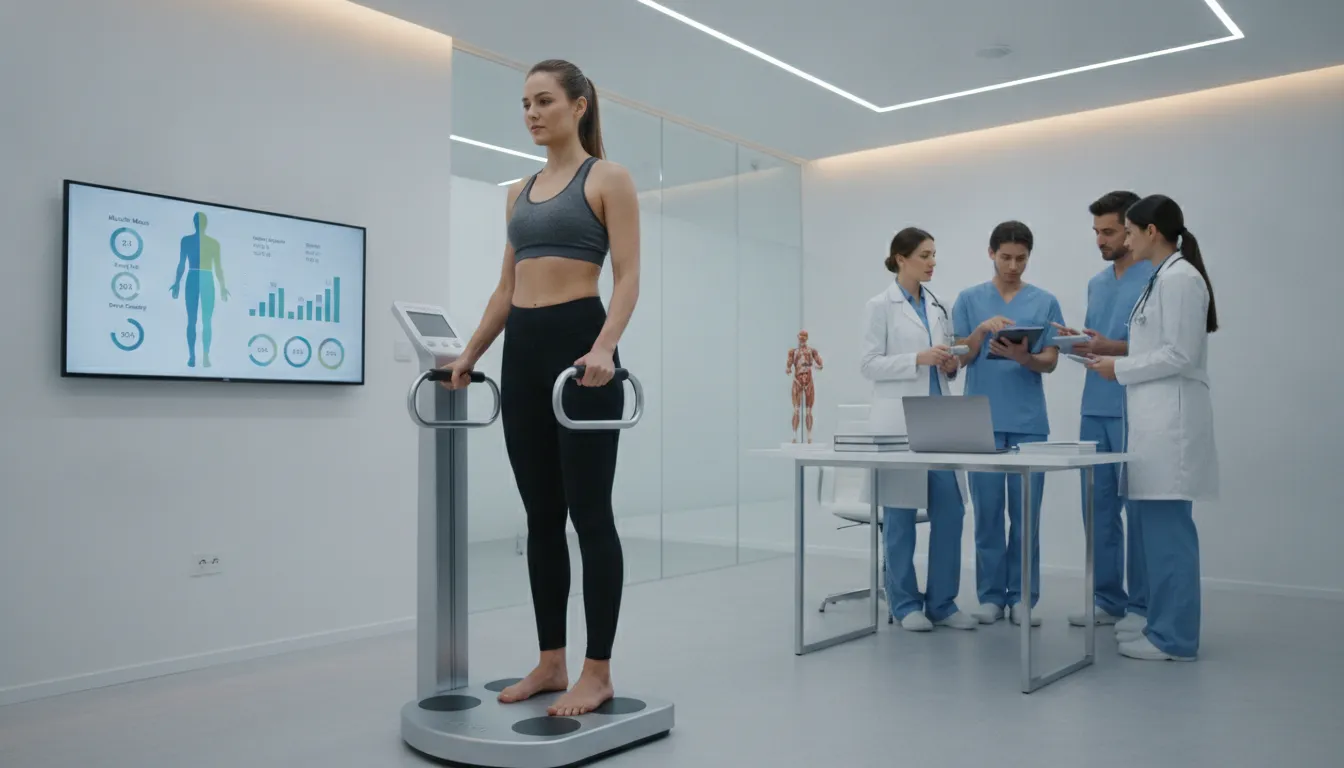
For an InBody assessment, you’ll typically stand barefoot on a scale-like device and hold its hand electrodes. The machine sends a small current through your body and measures resistance at multiple points. The scan usually takes a few minutes, and results are often ready soon afterward.
Your report may include estimates for body fat, skeletal muscle, and body water, along with other measures. At Monroe Township Bootcamp, InBody assessments can help you track body-composition changes alongside your training. Ask your coach to explain how to read the report in relation to your goals. The numbers are most useful when you compare them over time, rather than treating one assessment as a complete picture of your progress.
What InBody metrics can—and can’t—tell you
An InBody report may estimate body fat percentage, fat mass, skeletal muscle mass, total body water, visceral fat, and the composition of different body segments. Looking at these measures over time can reveal changes that scale weight alone may not show. For example, your weight might stay similar while estimated fat mass decreases and muscle mass increases.
The report cannot diagnose a medical condition or describe your overall health on its own. Your habits, fitness, medical history, and how you feel all matter, too. The Obesity Action Coalition’s guide to body composition explains why these measurements are only one part of the broader health picture. If a result raises a health concern, discuss it with a qualified healthcare professional.
Why consistent testing conditions matter
Hydration, recent meals, exercise, and the time of day can affect BIA readings. For instance, changes in fluid levels may influence body-water estimates and, in turn, other figures on your report. A different reading does not automatically mean your body composition has changed.
For a clearer comparison, try to take each assessment under similar conditions. Follow the instructions you’re given, and avoid comparing readings taken after very different routines or at different times of day. Focus on the pattern across several assessments rather than one result. UC Davis Health’s guidance on body composition testing explains why consistent testing conditions matter when comparing measurements.
How Should You Prepare for and Interpret Results?
A body composition assessment is most useful when you treat it as a way to track changes over time, not as a final verdict on your health or fitness. Before your appointment, check which method the facility uses and follow its preparation instructions. A DXA scan and an InBody assessment use different methods, so their preparation guidelines may not be the same.
When you review your results, consider several measures together and keep the testing conditions in mind. Hydration, meals, and recent exercise can affect some readings, especially those from bioelectrical impedance analysis (BIA). Monroe Township Bootcamp offers InBody assessments to help members track body composition alongside their training. These steps can help you get useful information from your assessment.
Follow instructions and keep conditions consistent
Preparation depends on the assessment method, so follow the instructions from the facility performing your test. For a DXA scan, UC Davis Health recommends arriving well hydrated, avoiding food for at least three hours beforehand, and removing metal items such as watches and jewelry. Clothing without zippers or underwires may also be preferable.
Don’t assume the same instructions apply to every type of assessment. Ask the provider what to do before an InBody or other BIA test. For repeat measurements, aim for similar conditions each time, such as a similar time of day and routine. Consistency makes it easier to compare results and identify meaningful trends.
Consider hydration, meals, and recent exercise
Hydration, meals, and recent exercise can affect BIA readings. Because BIA estimates body composition through the body’s electrical properties, changes in body water may influence the result. A measurement taken soon after a workout or a large meal may not be directly comparable with one taken under different conditions.
The Obesity Action Coalition explains that hydration, food intake, and exercise can influence body composition measurements. You don’t need to worry about every small fluctuation. Instead, follow your provider’s preparation guidance and note anything unusual about the conditions on testing day. If you’re unsure whether to eat, exercise, or drink beforehand, ask the staff performing the assessment.
Compare results from the same method over time
Different assessment methods use different techniques, so their results aren’t interchangeable. An InBody BIA reading and a DXA scan, for example, may estimate body composition differently. To track change, repeat the same type of assessment under similar conditions instead of comparing readings from different devices or methods.
How often to test depends on your goals and the provider’s guidance. For DXA tracking, UC Davis Health suggests repeat scans every three to six months. That recommendation applies to its DXA guidance, not every person or assessment method. A trainer or healthcare professional can help you choose a schedule that gives you useful information without putting too much emphasis on short-term fluctuations.
Review several metrics, not just one
A body composition report may include estimates of body fat, fat mass, lean mass, skeletal muscle, and body water. Review these measures together rather than focusing only on a single number, such as body-fat percentage or scale weight. For example, stable weight alongside lower estimated fat mass and higher muscle mass may point to progress that the scale doesn’t show.
The InBody overview of body composition explains how tracking changes in fat, muscle, and body water can provide a fuller picture over time. You can also consider your strength, workout performance, energy, and how your clothes fit. Taken together, these signals help put an unexpected reading in context.
Treat results as estimates, not diagnoses
Body composition devices provide estimates, and every method has limitations. A report can help you monitor changes, but it can’t diagnose a health condition or determine your overall health by itself. Results may also vary based on the measurement method and the conditions on the day of your assessment.
The Obesity Action Coalition recommends using body composition information as part of a broader care plan, not as a stand-alone judgment. Apply the same thinking to fitness goals: use the numbers as one source of feedback alongside your habits, wellbeing, and progress over time. If a result surprises you, ask the provider to explain it before making major changes to your eating or training.
Ask a qualified healthcare professional about health concerns
If a result raises a health concern, discuss it with a qualified healthcare professional. They can interpret the measurement in light of your medical history, age, and individual needs. Healthy ranges vary from person to person, so a number outside a general range doesn’t automatically explain what’s happening with your health.
A trainer can help connect assessment trends with your workout goals, but they don’t replace medical advice. If you have a health condition, take medication that may affect fluid balance, or feel unsure about a report, bring your questions to your healthcare provider. Guidance from Arthritis and Sports also emphasizes working with a health professional to understand results in context.
What Are the Limits and Misconceptions of Body Composition Analysis?
Body composition analysis can add context to your fitness progress, but it doesn’t tell the whole story. Results are estimates, so consider them alongside your strength, energy, habits, and overall health.
Don’t let one reading define your health or progress
One assessment is a snapshot, not a verdict on your health or effort. A single result can’t show whether your plan is working or explain how you feel. Instead, compare readings taken under similar conditions and look for patterns over time. You can also track practical signs of progress, such as lifting heavier, moving with less effort, or sticking to your workouts more consistently.
Regular assessments may help you and your care team monitor changes and adjust a plan. The Obesity Action Coalition’s guide to body composition recommends discussing results as part of a broader care plan, not treating them as a stand-alone judgment. If a reading surprises you, consider its context before changing your routine.
Know that hydration and other factors can shift results
Many assessments, including InBody tests, use bioelectrical impedance analysis. The device sends a small electrical current through your body and uses the response to estimate body composition. Because water affects how that current travels, your hydration level can influence the result. Recent meals, exercise, and testing conditions may also contribute to variation.
That doesn’t make the assessment unhelpful. It means consistency matters. Follow the testing instructions and, when possible, take each assessment at a similar time of day under similar conditions. If one reading differs from your usual trend, avoid making a major change based on that number alone. InBody explains how hydration can affect body composition estimates, so note the conditions around each test when reviewing your results.
Remember that no single body-fat percentage suits everyone
It’s easy to compare your body-fat percentage with a chart or another person’s result. But a number that works as a reference for one person may not mean the same thing for someone else. Age, sex, genetics, health history, and other individual factors all shape how a result should be understood. There isn’t one percentage that defines a healthy body for everyone.
Use the measurement to track change over time, rather than as a pass-or-fail score or a target to reach at any cost. Progress may also show up in your strength, energy, or how your clothes fit. The Obesity Action Coalition describes body composition as one way to monitor changes during a plan, with results interpreted in context. If you have health concerns, ask a qualified healthcare professional what the results may mean for you.
Understand that more muscle can raise scale weight without adding fat
The scale measures your total body weight. It doesn’t show how much comes from fat, muscle, water, or other tissue. If you build muscle while losing fat, your weight may change slowly or stay similar even as your body composition shifts. That’s why scale weight alone can miss meaningful progress.
Two people can weigh the same but have different proportions of muscle and fat, and BMI doesn’t show that difference. An assessment can provide extra information, but its estimates should still be considered alongside your health, training, and goals. Arthritis and Sports explains how people at the same weight can have different body compositions. Track other markers, too, such as strength gains, workout consistency, and how you feel during exercise.
Know that body composition analysis can’t pinpoint where you’ll lose fat
An assessment estimates your current body makeup. It can’t predict which areas will lose fat first or show exactly how your body will change as you lose weight. Fat loss patterns vary from person to person, and exercises that focus on one area don’t guarantee that fat will come off that area specifically.
Rather than setting a goal around changing one body part, focus on actions you can repeat: strength training, balanced meals, enough recovery, and a sustainable approach to weight loss. Use assessments to follow overall trends, alongside your measurements and how you feel during workouts. If you have a specific health concern or want help choosing an appropriate goal, discuss your results with a qualified healthcare professional. An assessment can inform that conversation, but it can’t replace personalized guidance.
How Can Body Composition Analysis Guide Fitness and Nutrition Goals?
Body composition results can help make fitness goals more specific. Instead of focusing only on a target weight, you can look at estimated body fat, lean mass, and other measurements alongside your strength, energy, and workout performance. Together, these details can help you decide whether your current habits support the changes you want.
The key is to look for patterns over time. A single assessment is a snapshot, and results can shift with hydration, recent exercise, meals, and other factors. Compare measurements taken with the same method under similar conditions, then consider how they fit with your day-to-day experience. You might be getting stronger or feeling better even when the scale has barely moved.
Use body composition analysis as one tool for reviewing your plan, not as a pass-or-fail grade. If a result surprises you, pause before changing your diet or workouts. Consider the full picture, and ask a qualified healthcare professional for guidance if you have health concerns or are thinking about major changes.
For weight loss, track fat trends while preserving muscle
If your goal is weight loss, look beyond the number on the scale. A gradual decline in estimated body fat while lean mass stays relatively steady may suggest that your routine is helping you lose fat while preserving muscle. That can be a more useful goal than simply chasing a lower weight. Strength training, adequate nutrition, and a sustainable pace all play a part.
Body composition readings are estimates, so focus on patterns across repeated assessments rather than a single result. The Arthritis and Sports guide to body composition explains how tracking fat and muscle can support more specific goals. If you’re unsure how to interpret your results or choose a safe weight-loss target, talk with a qualified healthcare professional.
For muscle gain, track lean mass and strength
If you’re working to build muscle, pay attention to estimated lean mass alongside your strength and training performance. An increase in lean mass may be consistent with progress, but it does not confirm that every change comes from muscle. Hydration and other factors can affect assessments, so compare results taken under similar conditions and over time.
Keep a simple training log, too. Record the weights you lift, your repetitions, and how exercises feel. When those measures improve alongside a steady or increasing lean-mass trend, you have more context than either measure provides alone. UC Davis Health notes that skeletal muscle mass results are estimates. Its overview of DEXA body composition analysis explains how these estimates are used and interpreted.
For athletic performance, consider sport-specific measures
For athletic goals, body composition is only one part of the picture. A runner, recreational lifter, and soccer player may each care about different measures, such as endurance, strength, balance, or movement efficiency. A general estimate of body fat or muscle cannot tell you by itself whether you’re ready for a particular sport or training demand.
Pair body composition trends with measures that relate to your activity. These might include workout performance, recovery, mobility, or a coach’s observations about movement. Some assessments also show differences between body regions, which may offer useful context for training conversations, but they cannot diagnose an injury or explain its cause. Prenuvo’s overview of body composition describes how measurements can help track changes in fat and muscle and inform discussions about movement and wellness goals.
Use results to inform, not dictate, nutrition and training
Treat an assessment as a reason to review your plan, not an instruction to make an immediate change. If your results differ from what you expected, consider when and how the measurement was taken. Then look at the wider picture: your eating and training habits, strength, energy, sleep, and how consistently you’ve followed your routine.
One reading should not determine what you eat or how you train. If results raise concerns or you’re considering major changes, discuss them with a qualified healthcare professional. The Obesity Action Coalition’s guide to body composition recommends viewing results as part of a broader, personalized approach to health, rather than as a stand-alone judgment. A coach can also help you connect fitness trends to practical adjustments in your workouts.
Prioritize sustainable eating, strength training, recovery, and wellbeing
Build a plan around habits you can maintain. Choose eating patterns that provide enough nourishment for daily life and workouts, and include strength training that suits your experience and schedule. Make room for rest and recovery, too. If your routine leaves you constantly exhausted or feels too restrictive to follow, consider adjusting it instead of simply pushing harder.
Progress can show up in more ways than a change in body composition. You might notice improved strength, better stamina, more consistent workouts, or greater ease with daily activities. Use those signs alongside assessment trends to decide whether your approach is working for you. People have different needs and starting points, so a useful plan should reflect your health, preferences, and goals. A qualified healthcare professional can help tailor guidance to your circumstances.
Avoid drastic dietary changes and overreacting to short-term shifts
Body composition estimates can vary between assessments, especially when testing conditions differ. A short-term change does not automatically mean your routine has stopped working or that you need to eat less or add more workouts. Before making adjustments, check whether you tested at a similar time of day and under similar conditions, then look at the trend over a longer period.
Avoid making drastic dietary changes based on one measurement. Losing muscle during weight loss can make it harder to maintain progress, so preserving strength and getting adequate nourishment matter. If a trend concerns you, bring your results to a healthcare professional and ask what they mean in context. The Obesity Action Coalition’s body composition resource advises using these measurements as part of a broader care plan, not as the only basis for health or weight-related decisions.
How Can Monroe Township Bootcamp Help You Track Progress?
Pair InBody assessments with bootcamp-style strength training
Regular bootcamp-style workouts give you a place to work on strength and fitness goals. An InBody assessment adds another way to check how your body may be changing, with estimates such as body fat and lean mass. Looking at both can give you a broader view of progress than scale weight alone.
At Monroe Township Bootcamp, members can pair training with InBody assessments. Use the results as one part of your progress check, alongside workout consistency, strength, energy, and how you feel. Body composition measures can also help frame goals around reducing fat while maintaining or building muscle, as Arthritis and Sports explains. An assessment is an estimate, not a judgment of your effort or a complete picture of your health.
Set a baseline and compare consistent measurements over time
Your first assessment gives you a baseline to compare with future results. Repeating the assessment can help you notice longer-term shifts in estimated body fat and lean mass. Since one reading is only a snapshot, look for patterns across several assessments rather than placing too much weight on a single result.
For useful comparisons, follow the preparation instructions and aim for similar testing conditions each time. Hydration, meals, and recent exercise may affect measurements. InBody USA’s guide to body composition recommends using a starting point to track changes over time. You can also keep brief notes about your workouts and how you feel. That context may help you make sense of the results and discuss your progress with a coach.
Use progress trends to support weight-loss and strength goals
If weight loss is your goal, body composition trends may add context to changes on the scale by showing how estimated fat and lean mass are shifting. If you’re focused on strength, assessments can serve as one reference point as you build a consistent training routine. Neither measurement tells the whole story, so consider results alongside workout performance, energy, and day-to-day wellbeing.
Use trends to guide a conversation about your next steps, rather than making sudden changes to your eating or exercise routine after one assessment. Monroe Township Bootcamp’s training options can be part of a steady approach to fitness. Give yourself time to build sustainable habits and compare results under similar conditions. That makes it easier to focus on meaningful changes instead of short-term fluctuations.
Explore InBody assessments and training options at Monroe Township Bootcamp
If you’re in the Monroe Township area and want to track more than scale weight, ask Monroe Township Bootcamp about its InBody assessments and bootcamp-style workouts. The gym’s InBody page explains its assessment offering, and its About Us page shares more about the gym. These pages can help you learn what to expect before you reach out.
Ask which preparation steps to follow and how often to repeat an assessment so you can compare results consistently. You can also talk with the team about how training fits your goals, whether you’re working on weight loss, strength, or both. An assessment provides estimates to consider alongside your workouts and wellbeing. A coach can help you use that information as one reference when planning your fitness routine.
Related Articles
- All About Body Composition
- Understanding Your Body Through Advanced Scanning
- What Is Body Composition?
- DXA Body Composition Analysis
- Body Composition: What It Is and Why It Matters
Frequently Asked Questions
Is a body composition test more accurate than a scale?
It provides different information rather than replacing the scale. A scale measures total weight, while a body composition test estimates how that weight is divided among fat, lean tissue, and water. Results are estimates, so use them to track patterns, not as exact measurements.
How often should I get an InBody assessment?
There’s no single schedule that suits everyone. Ask the gym team about timing, and leave enough time between assessments to look for meaningful changes. For a fair comparison, use the same device and follow similar testing conditions each time.
Can hydration affect my body composition results?
Yes. InBody uses bioelectrical impedance analysis, and changes in body water can affect its estimates. Recent meals and exercise may also influence readings. Follow the preparation instructions and try to test at a similar time and under similar conditions.
Can I lose fat without seeing much change on the scale?
Yes. If you lose fat while maintaining or building muscle, your weight may change only slightly. Body composition estimates, workout performance, and how you feel can provide helpful context alongside scale readings.
Can body composition results diagnose a health problem?
No. These assessments estimate body composition and are not medical diagnoses. If a result concerns you, discuss it with a qualified healthcare professional who can consider your health history and other factors.