


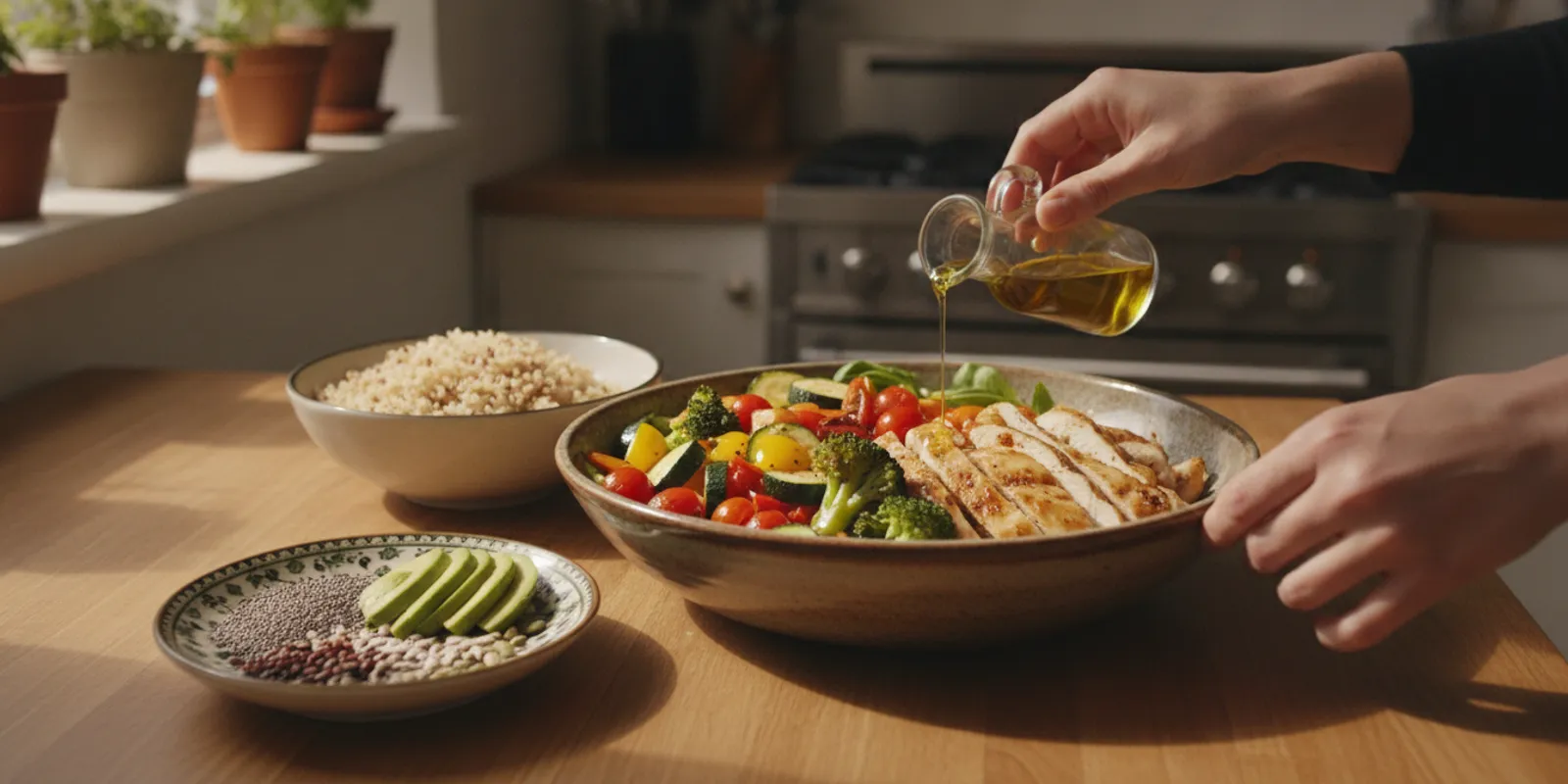

How to Count Macros for Weight Loss Without Overcomplicating It
Learning how to count macros for weight loss can give you a clearer picture of what you eat without turning every meal into a math problem. Macros are protein, carbohydrates, and fats—the three nutrients that supply much of the energy in food. Tracking them is one way to notice patterns and build meals that fit your needs. It is not a diagnosis, and an app’s number is not a personal prescription.
Explore a first step toward fitness coaching
What does counting macros mean?
Macro tracking means recording the amounts of protein, carbohydrate, and fat in foods and drinks, then comparing those amounts with a chosen plan or reviewing the pattern. Calories describe energy; macros describe where some of that energy comes from. An app may display both, but a macro total cannot tell the whole story about a food or your overall health.
Protein, carbohydrates, and fats each play different roles in a varied diet. Protein is found in foods such as beans, eggs, fish, dairy, poultry, tofu, and nuts. Carbohydrates come from grains, fruit, vegetables, beans, and many other foods. Fats are present in oils, nuts, seeds, avocados, and some animal foods. Many foods contain more than one macro: beans, for example, contribute both carbohydrate and protein.
People track for different reasons. Some want more structure around meals; others want to see whether their usual pattern includes a variety of foods. Tracking may help some people notice portions and routines, but it is only one possible tool. It cannot guarantee a particular result, and it may not suit everyone.
Why do individual macro needs vary?
There is no single macro split that makes sense for every person. Needs and preferences can differ with age, body size, activity, health circumstances, food access, cultural traditions, appetite, and goals. Medical conditions, medications, pregnancy, a history of disordered eating, or other individual factors may make generic online guidance inappropriate.
For those reasons, avoid treating a popular percentage, app target, or someone else’s meal plan as a rule for you. This article does not prescribe a calorie or macro target. If you want a personalized nutrition plan, speak with a licensed clinician or registered dietitian who can consider your circumstances. A fitness coach can offer general education and habit support within their role, but that is not diagnosis or clinical nutrition care.
How can you start tracking without getting overwhelmed?
Begin with observation rather than trying to perfect every meal. A short, honest food log can help you learn how an app works and what information is useful to you. You do not need to change your whole routine on day one. Use these steps as an introduction, not a required program.
- Choose a simple method. Use an app, spreadsheet, or notebook you can manage. Check what information an app stores and whether the interface feels comfortable.
- Record an ordinary day. Include meals, snacks, drinks, sauces, and additions such as oil or dressing. A typical day is more informative than an unusually restrictive one.
- Use labels when available. Check serving size on packaged foods and compare it with what you ate. For unlabeled foods, use a database cautiously because entries may differ.
- Estimate thoughtfully. Exact measurement is not always practical. If you estimate, keep the estimate consistent and remember it is an estimate. Precision should not become a source of stress.
- Review several days together. Ask which meals feel satisfying and convenient, and whether the process helps. One unusual meal does not define your routine.
- Choose whether to continue. If tracking feels useful and comfortable, you may keep it as a learning tool. If it increases anxiety, guilt, or rigid rules, stop and seek appropriate support.
Think of the first pass as information gathering. The point is not to earn a perfect score or label foods good and bad. A log is useful only when it supports a reasonable decision.
How do you make a food log more accurate?
Accuracy does not mean weighing every ingredient forever. It means entering information in a consistent way and understanding where estimates can be off. Begin with the foods that are easiest to record, then learn how to handle the items most likely to be missed in your own routine.
Check serving sizes against the amount eaten
A label’s serving is a reference amount, not an instruction that you must eat exactly that quantity. If a package lists a serving that is smaller than what you used, the log should reflect the quantity you actually had. Conversely, if you used less, do not automatically record a full serving. When measuring is convenient, cups, spoons, or a kitchen scale can help you learn what a portion looks like. You can return to reasonable estimates later.
For example, imagine making oatmeal and adding milk, fruit, and a spoonful of nut butter. Logging only the oats leaves out ingredients that contribute to the meal. But estimating every tiny sprinkle to the gram is unnecessary for most casual pattern reviews. Record the main ingredients in a consistent, practical way, and note uncertainty rather than pretending the entry is exact.
Choose the closest food entry
Food databases may include user-entered entries, branded products, restaurant meals, and generic foods. Two entries with similar names can have different serving units or macro values. Look for a match to the food and preparation you actually had. If the package has a label, that can be more relevant than a generic database entry. For a homemade recipe, entering ingredients separately or saving a recipe may be clearer than selecting a vaguely similar prepared dish.
Be careful with cooked and uncooked measurements. A dry grain and the same grain after cooking do not have the same weight or volume. Select an entry that corresponds to how you measured it. If you cannot tell, make a note and keep the estimate comparable on later occasions. The objective is a useful pattern, not false precision.
Remember additions and drinks
Cooking oil, butter, dressings, sauces, spreads, creamers, sweeteners, and beverages can be easy to forget because they are not always treated as separate foods. You do not need to scrutinize every condiment, but when a log repeatedly misses the same addition, the overall picture becomes less useful. Add the foods that matter to your meal and avoid treating a missed entry as a failure.
Restaurant meals are especially difficult to enter exactly when ingredients and portions are unknown. Choose a reasonably similar item if one exists, or record a broad description rather than trying to invent an exact breakdown. A restaurant meal is not a reason to skip the rest of the day or compensate later. Return to your usual routine at the next meal.
How do you interpret protein, carbohydrates, and fats?
Each macro category includes many different foods. Counting can show which sources appear in your routine, but it cannot judge the overall quality or suitability of a diet on its own. Look at food choices, satisfaction, convenience, and variety alongside any numbers you choose to review.
Protein: notice sources across the day
Protein appears in animal and plant foods. Examples include eggs, yogurt, fish, poultry, tofu, lentils, beans, nuts, and seeds. A log can help you see whether meals tend to include sources you enjoy, or whether most of your intake comes at one point in the day. That observation may prompt a practical meal-planning idea; it does not establish an individual requirement.
For instance, someone who usually has coffee alone in the morning might decide to prepare yogurt with fruit, or eggs with toast, if those foods suit their preferences and needs. Someone who prefers plant-based meals might keep beans, lentils, tofu, or hummus available. These are examples rather than a prescribed plan. People with medical nutrition needs should seek individual guidance rather than use a generic app target.
Carbohydrates: look beyond a single number
Carbohydrates are found in grains, fruit, vegetables, legumes, milk, and many other foods. Foods within this category differ in their other nutrients and how they fit a meal. Oats, bread, potatoes, fruit, rice, and beans are not interchangeable in every recipe, but none needs to be automatically removed just because you are tracking.
If your log suggests you often eat a carbohydrate food by itself and feel hungry soon afterward, you might experiment with a combination you like, such as fruit and yogurt or toast with eggs. If a clinician has offered specific advice about carbohydrate intake, ask that professional how it applies to your situation. A general article cannot replace that conversation.
Fats: include the foods and additions you use
Fats are part of foods such as oils, nuts, seeds, avocado, dairy, and some meats. They can also appear as cooking ingredients, toppings, or sauces. Their presence is one reason a recipe can be difficult to estimate by looking at the main ingredient alone. Note the additions that are meaningful to your own meals, but do not assume that tracking requires removing fat-containing foods.
A practical review might ask whether the log includes the oil used to cook vegetables or the dressing added to a salad. It need not become a rule to avoid either. The goal is to understand your pattern in context and make choices that are satisfying and workable.
How do you turn observations into useful changes?
After recording several typical days, look for repeated patterns instead of reacting to a single total. Do you skip meals and then feel very hungry later? Are your lunches difficult to arrange during a busy workday? Do you have foods you enjoy but rarely keep on hand? Is the tracking process useful, or does it take attention away from eating comfortably? These are more actionable questions than asking whether every day was perfect.
Choose one small experiment at a time. If breakfast is rushed, prepare a portable option the night before. If lunch is unpredictable, keep a convenient combination available, such as canned beans with rice and vegetables, or a sandwich with fruit. If an afternoon snack does not satisfy you, try pairing two foods you enjoy, such as crackers and hummus or fruit and cheese. These are flexible examples, not prescriptions.
Give an experiment enough ordinary opportunities to see whether it fits, but do not turn it into a test of willpower. If the new breakfast is too much effort, choose another. If the food is unavailable or too costly, adapt the idea. A plan that works on paper but not in your life is not a useful plan.
A worked example: reviewing a busy weekday
Suppose your log shows coffee in the morning, a rushed lunch, and a large evening meal after a long day. Instead of immediately changing all three meals or setting a numerical target, ask what part of the day feels hardest. Perhaps breakfast is not appealing, but having a packed lunch would make the afternoon easier. You might test a simple lunch assembled from ingredients you already buy, then see whether it is convenient and satisfying.
In this example, the log’s value is not that it proves a problem or dictates a precise fix. It gives you a starting point for an experiment. If the packed lunch works, keep it in rotation. If it does not, identify why: preparation time, storage, appetite, or taste. Change one feature rather than abandoning the whole effort.
A worked example: handling a social meal
Suppose friends invite you to dinner and you do not know the recipe or serving sizes. You can enjoy the meal without trying to reconstruct every ingredient. If you are logging, use a reasonable broad entry or leave the meal as a note. Do not skip a later meal or exercise to compensate. The next day, return to the ordinary routine and decide whether tracking still feels helpful.
There is no single correct response to every social meal. Some people prefer not to log when details are unavailable; others record an estimate and move on. The key is not allowing uncertainty to create guilt or rigid rules. A tracking tool should fit around life, not make ordinary events feel like mistakes.
How can you plan meals without chasing exact targets?
It can help to think about meal components rather than assembling each plate around a number. Choose a protein-containing food you enjoy, add a carbohydrate source, and include vegetables, fruit, or another food that makes the meal satisfying. Add fats according to preference and the ingredients you use. This flexible structure works across many cuisines and does not require special products.
- Breakfast: eggs or tofu with toast and fruit; or yogurt with oats, fruit, and nuts.
- Lunch: beans or chicken with rice, vegetables, and a dressing or sauce you enjoy.
- Snack: fruit with cheese, or hummus with vegetables and crackers.
- Dinner: fish, lentils, or another protein choice with potatoes or grains and vegetables.
These are starting points, not a required menu. Swap ingredients based on availability, budget, cultural familiarity, and preferences. Frozen and canned foods can be convenient. If you have allergies, a medical diet, or other nutrition concerns, get individual guidance rather than relying on generic examples.
Make a short list of reliable combinations
Meal planning does not need to mean preparing every meal for a week in advance. Write down a few combinations you already enjoy and can assemble with little effort. A useful list might include a breakfast you can eat at home, a lunch that travels well, an easy dinner for a late evening, and a snack that is easy to keep available. Repeating meals is fine if it suits you; variety can come from small changes such as different fruit, vegetables, sauces, or protein sources.
For a busy week, separate the decision from the cooking. You might choose two lunch options and keep the ingredients on hand rather than making a detailed seven-day menu. If plans change, switch meals or use leftovers. The point is to lower the number of decisions that feel urgent, not to enforce a fixed schedule.
Adapt to budget, access, and household needs
A meal pattern must work with the food you can obtain and the people you cook for. Canned beans, frozen vegetables, eggs, oats, rice, and other familiar staples may be useful in different households, but no shopping list suits everyone. Consider what is already in your kitchen, what stores reliably carry, and how much time you have. A tracking app does not know these constraints unless you account for them yourself.
If meals are shared, you do not need to create a separate menu for each person simply to track macros. You can prepare a common base and let people choose additions that suit their tastes. Anyone with a medical diet, food allergy, or other specific need should follow their qualified professional’s guidance. The general examples here are not a substitute for that care.
What are common macro-tracking mistakes?
- Copying another person’s target. A friend’s numbers or a social-media plan may not fit your circumstances. Treat them as someone else’s choices, not your prescription.
- Changing everything at once. A long list of new rules is difficult to evaluate. Observe first, then test one realistic change at a time.
- Assuming an app is exact. Database entries differ. Use labels where relevant and accept that estimates have limits.
- Ignoring enjoyment and convenience. A plan that conflicts with your schedule, preferences, and budget may not be useful for long.
- Treating numbers as a grade. Daily totals change with appetite, schedule, and social plans. A snapshot is not a verdict on your effort or health.
- Confusing coaching with clinical care. Fitness and nutrition coaching can support habits, but does not diagnose or treat medical conditions.
- Expecting a guaranteed outcome. Tracking cannot promise a specific amount of weight change or timeline. Outcomes differ between people.
How can you use tracking in a balanced way?
Set boundaries before tracking becomes a chore. You might record only information that helps you plan, or review patterns periodically rather than checking an app after every bite. Keep meals social and enjoyable. Make room for foods you like without assigning moral value to them.
Watch for signs that the process is no longer serving you. If you feel compelled to compensate for eating, avoid social meals, become distressed by small changes in the log, or find that tracking intensifies restrictive habits, take a break and talk with a qualified professional. People with a current or past eating disorder may want to avoid self-directed macro tracking unless their care team recommends and supports it.
Weight change is influenced by many factors, and a food log cannot forecast an individual outcome with certainty. The NIDDK’s Body Weight Planner is a government resource for exploring personalized calorie and activity plans. It is a planning tool, not a substitute for care or a promise about what will happen. Consult a licensed clinician about health questions or a safe approach to weight management.
How can coaching fit into nutrition habits?
Some people find support useful while working on routines around movement, food, rest, and consistency. Monroe Twp Boot Camp describes nutrition coaching as consultation, a plan, and ongoing support. Understand this as coaching and education, not medical diagnosis, dietitian care, or treatment of a health condition. Ask what a program includes and whether it matches the support you want.
The gym also describes coach-led group workouts, private training, and a 63-day habit program. These are different formats, and questions about fit depend on your goals, schedule, experience, and preferences. You can read about food habits and thoughtful choices as another starting point for reflection.
If you are new to exercise, ask how movements can be adapted and what to expect during an introductory visit. First-visit guidance recommends arriving a few minutes early, wearing comfortable exercise clothes, and bringing water, a mat, and a towel. Keep sneakers off the main exercise mats. An inquiry is a request to connect, not a confirmed class reservation or a promise of a particular result.
What should you ask before seeking nutrition support?
Before choosing any kind of support, name the question you want answered. Are you looking for general ideas for building routines, help coordinating exercise with a busy schedule, or individualized nutrition advice related to a health concern? Those are different needs and may call for different professionals. Being clear about the distinction can make an introductory conversation more useful.
- What does the service cover, and what is outside its scope?
- Is the guidance general habit education or individualized clinical nutrition care?
- Who should I contact if I have a medical condition, medication question, allergy, or history that affects eating?
- What does participation involve, and what expectations should I understand before I begin?
- How can the approach adapt to my schedule, food preferences, and experience with exercise?
These questions do not assume that one kind of support is right for everyone. A coach can help with fitness routines and habit accountability within the gym’s stated scope. A licensed clinician or registered dietitian is the appropriate person for diagnosis, treatment, or individualized care where those are needed. You can use both kinds of support for different purposes without confusing their roles.
How does exercise support fit with food habits?
Food tracking is only one part of a broader routine. Some people also want movement they can repeat, coaching that helps them learn exercises, or a community that makes attendance easier. The practical question is not whether a particular workout earns or cancels a meal; it is whether the activity is suitable, enjoyable enough to return to, and adaptable to your experience.
Monroe Twp Boot Camp describes group boot camp sessions as coach-led and adaptable, with workouts of about 45 minutes or less. It also describes private training, kickboxing, and the 63-day habit program. These offerings are not nutrition prescriptions, and no workout guarantees a specific change in weight. If exercise is new to you or you have health concerns, ask an appropriate professional what is safe for your circumstances.
For an introductory visit, the gym’s guidance says to arrive a few minutes early, wear comfortable exercise clothes, bring water, a mat, and a towel, and keep sneakers off the main exercise mats. The public first-class form requests an inquiry but does not provide a date or time for a confirmed reservation. Ask about current arrangements directly instead of assuming a particular class slot.
Frequently asked questions
Do I need to count macros to lose weight?
No. Macro tracking is one optional way to review eating patterns. Some people prefer other approaches, such as planning meals or working with a qualified professional. Choose a method that is appropriate for you and does not create unnecessary distress.
Should I use a fixed macro percentage?
Not automatically. A fixed percentage may not reflect your needs, health circumstances, food preferences, or activity. This guide does not set personal targets. Ask a licensed clinician or registered dietitian for individualized advice.
How long should I track my food?
There is no required duration for everyone. Some people use a short log to learn about their routine; others find ongoing tracking unhelpful. Review whether it supports your wellbeing and goals, and stop or seek support if it causes stress or rigid behavior.
Can nutrition coaching replace a dietitian or doctor?
No. Coaching may offer general education and accountability, but it is not diagnosis, medical treatment, or a substitute for a licensed clinician or registered dietitian. For a health condition or individualized clinical nutrition needs, consult an appropriate professional.
What is a sensible next step if I want support?
Start by identifying what kind of help you want: general habit education, exercise guidance, or individualized clinical nutrition care. To learn about Monroe Twp Boot Camp’s approach, send an inquiry and ask about options, expectations, and fit before deciding.
Learn about coaching and support options
Macro tracking works best as information you can use thoughtfully, not a set of rigid rules. Keep your approach flexible, seek qualified guidance when needed, and choose habits that fit your life.